2 min read
Why Human Error Is Still the #1 Cyber Risk in 2026 and How to Fix It
Adrian Ghira
:
Jan 22, 2026 9:00:01 AM
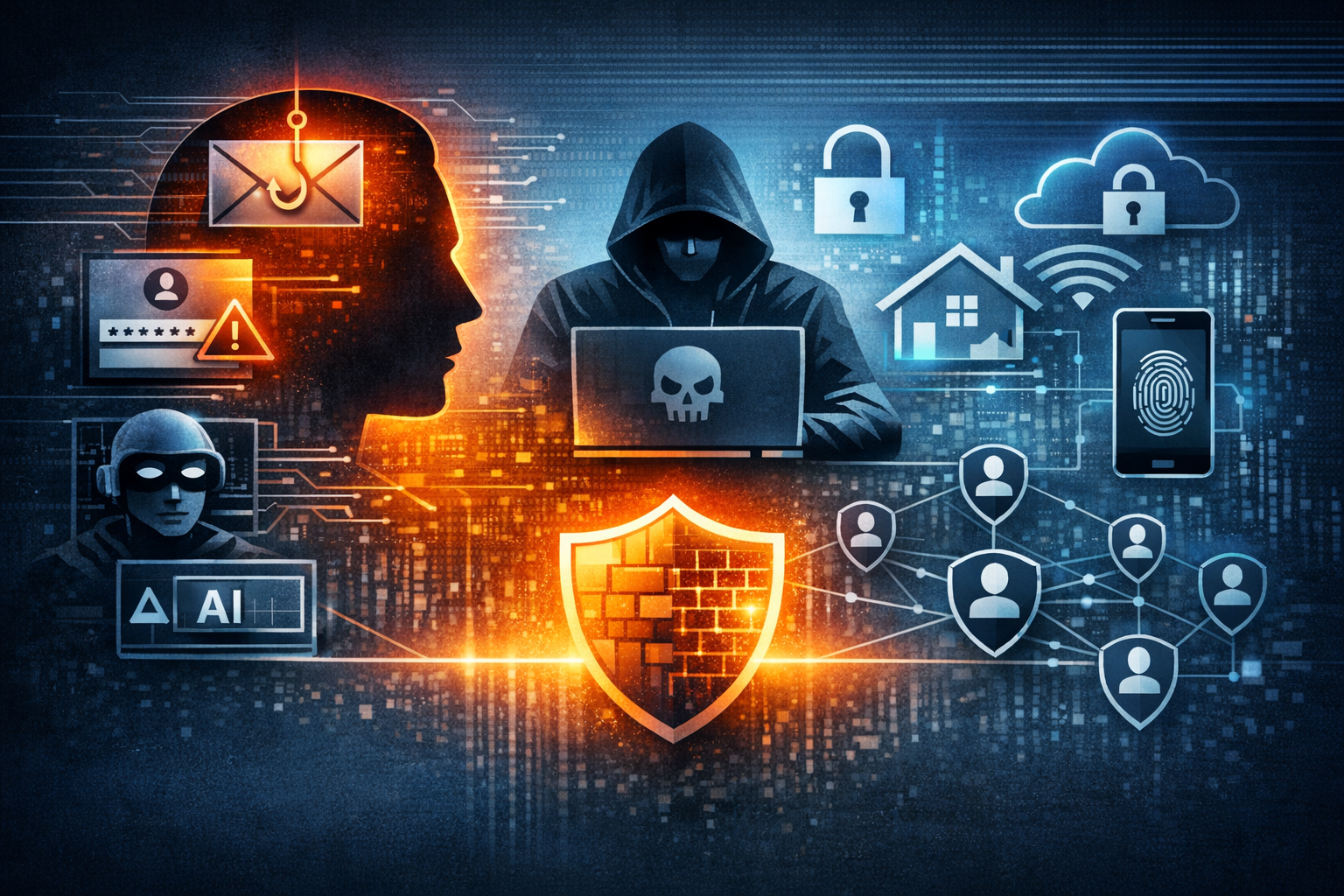
No matter how advanced cybersecurity tools become, attackers always find success exploiting one thing: human behavior. In 2026, human error continues to be responsible for the overwhelming majority of breaches. Despite new tools, stronger firewalls, and improved detection, employees remain the single most targeted and vulnerable entry point for attackers.
This blog explores why human error continues to dominate cyber risk, how attackers have evolved, and what organizations must do in 2026 to minimize their exposure.
1. WHY HUMAN ERROR CONTINUES TO DRIVE BREACHES
Common human-driven causes of breaches:
- Clicking malicious links
- Opening infected attachments
- Reusing passwords
- Falling for impersonation attacks
- Approving fraudulent MFA prompts
- Using unauthorized software
- Losing or mishandling devices
These mistakes don’t happen because people are careless—they happen because attackers are strategic and psychologically skilled.
2. AI HAS TRANSFORMED SOCIAL ENGINEERING
Attackers now use AI to generate perfect phishing emails, clone voices, create fake videos, and imitate internal communication. This means:
- Emails look identical to real internal messages
- Fake login pages mimic company portals perfectly
- Voice calls from “executives” sound real
- Attackers gather personal details from public sources to personalize attacks
Employees are no longer facing sloppy, obvious threats—they’re facing precision-engineered deception.
3. THE HYBRID WORK RISK EXPANSION
Hybrid work environments introduce new vulnerabilities:
- Unsecured home Wi-Fi
- Family members using shared devices
- Lack of physical security
- Distracted work environments
- Increased reliance on cloud systems
Attackers know this and tailor attacks to remote workers who lack immediate in-office IT support.
4. THE SOLUTION BUILDING A HUMAN FIREWALL
Technology alone cannot fix human risk. Organizations must invest in continuous training programs designed to reinforce good habits and identify threats early.
The most effective strategies include:
- Monthly micro-training
- Quarterly phishing simulations
- Password hygiene enforcement
- Role-based security education
- Clear and simple reporting processes
- Executive-level participation
- Gamified learning for engagement
Training must become part of the culture not an annual checkbox activity.
5. CREATING A SAFETY-FIRST CULTURE
Employees should feel safe reporting mistakes. Most breaches occur because an employee hesitated to disclose something suspicious out of fear or embarrassment.
A strong culture:
- Encourages questions
- Rewards responsible behavior
- Provides quick access to IT security
- Removes shame from reporting mistakes
6. TECHNOLOGY THAT SUPPORTS HUMAN BEHAVIOR
Tools must complement training:
- MFA reduces password-related breaches
- Next-gen email filtering blocks phishing attempts
- EDR tools isolate infected devices
- Zero Trust limits lateral movement
Human risk will never be eliminated, but it can be minimized with layered defense.
Conclusion
Human error remains the #1 cyber risk in 2026—and it will stay that way until organizations prioritize people as much as technology. The companies that win will be those that train, empower, and support their teams consistently.
Employees aren’t the weakest link—they’re the most important defense when equipped properly.
Unlock the Benefits of Managed IT Services
Businesses need reliable IT systems. Managed IT services offer a solution. But what is managed IT services, and why are they important?
Healthcare IT Security Compliance: Protecting Patient Data in 2025
Healthcare organizations face a unique challenge that keeps me awake at night: they're simultaneously the most targeted industry for cyberattacks and...